In November, we welcomed Dutch-Curaçaoan artist, poet, and activist Quinsy Gario for a month-long residency at G.A.S. Lagos. Working across performance, film, photography, and text, Quinsy’s practice interrogates how histories of enslavement and displacement continue to circulate, emotionally, materially, and politically, tracing suppressed narratives and advocating for justice, recognition, and repair. Quinsy arrived in Lagos at a pivotal moment in his research, focused on human remains discovered in St. Martin, believed to be linked to Nigeria and dated between 1660–1680. His residency offered dedicated time to explore questions of belonging, return, and the ethical responsibilities attached to repatriation. During his stay, he connected with local artists, theatre-makers, poets, and researchers addressing related themes, including colonial memory, slavery, and the politics of preservation.
As part of his residency, Quinsy contributed to the 2025 Re:assemblages Symposium in the roundtable session Sustaining the Otherwise: The Unruly Archive. This collaborative session, hosted by Sustaining the Otherwise, a long-term research and artistic project on restitution, reparation, and transformation, and G.A.S. Foundation, treated archives as living, performative ecologies. It traced everyday memory work, counter-archives, and strategies that challenge colonial and racial structures across African and diasporic contexts. Through collective rehearsal, dialogue, and iterative engagement, Quinsy and fellow presenters explored how knowledge, memory, and ethical imagination circulate when archives are danced, spoken, or rewritten in the body, opening new political, epistemic, and imaginative possibilities. Beyond the symposium, Quinsy researched using the G.A.S. Library and Picton Archive, and visited key sites such as the Slave Museum in Calabar and the Osun-Osogbo Sacred Grove, enriching his understanding of local histories and expanding his network of collaborators for current and future projects.
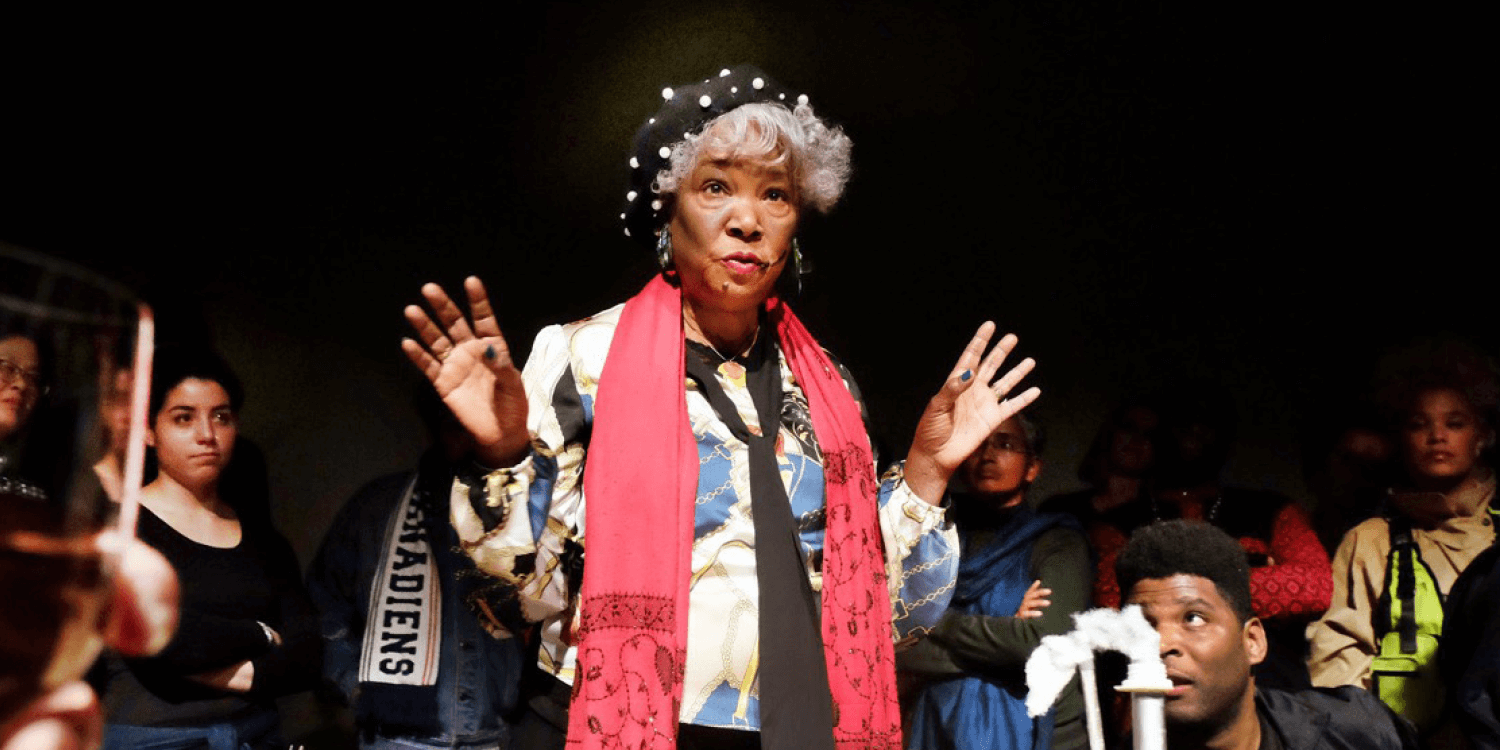 Whiskey in a Crate. Performance in collaboration with Glenda Martinus. Presented at Performance Philosophy Festival in Rakke Grond (Amsterdam) in 2019; Right About Now Festival at Compagnie Theater (Amsterdam) & Van Abbemuseum (Eindhoven) in 2020. Special thanks to Defuntu Tio Rochi and Noa Roei.
What is the current focus of your creative practice?
My current research centres around the remains recently found in St. Martin, believed to originate from present-day Nigeria. I’m interested in how these lives—fragmented by time, displacement, and colonial archives—might be re-contextualised through artistic and scholarly collaboration. Across performance, film, poetry, and documentation, my practice asks how we can rethink belonging, repair, and return when the past is both incomplete and politically charged.
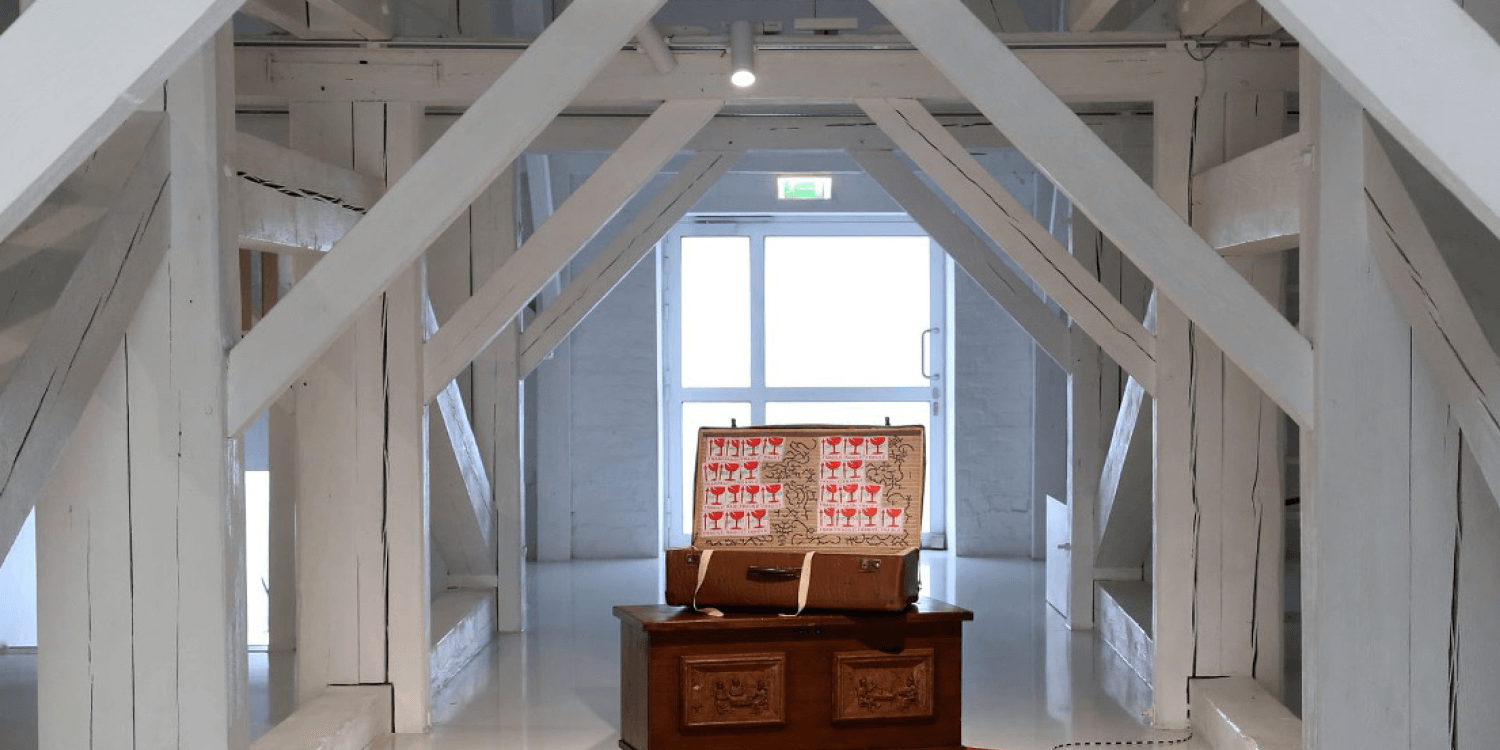 How to Lift the Arms of De Hoop. Installation in collaboration with the Latvian Center for Contemporary Art. Commissioned by the Latvian Center for Contemporary Art for Difficult Pasts. Connected Worlds from 28 Nov 2020 until lockdown. Supported by the Mondrian Fund.
What drew you to apply for this residency and how do you think it will inform your wider practice?
The residency offers a unique opportunity to engage directly with the Nigerian contexts connected to my research. Lagos is a vibrant and complex site from which to think about memory, diaspora, and cultural transmission. With the support of G.A.S. and its network, I hope to meet artists, cultural workers, and scholars who are exploring similar questions around colonialism, archives, and restitution. The residency enables me to situate my project within a broader ecosystem of critical and creative thought—one rooted in both local expertise and transnational exchange.
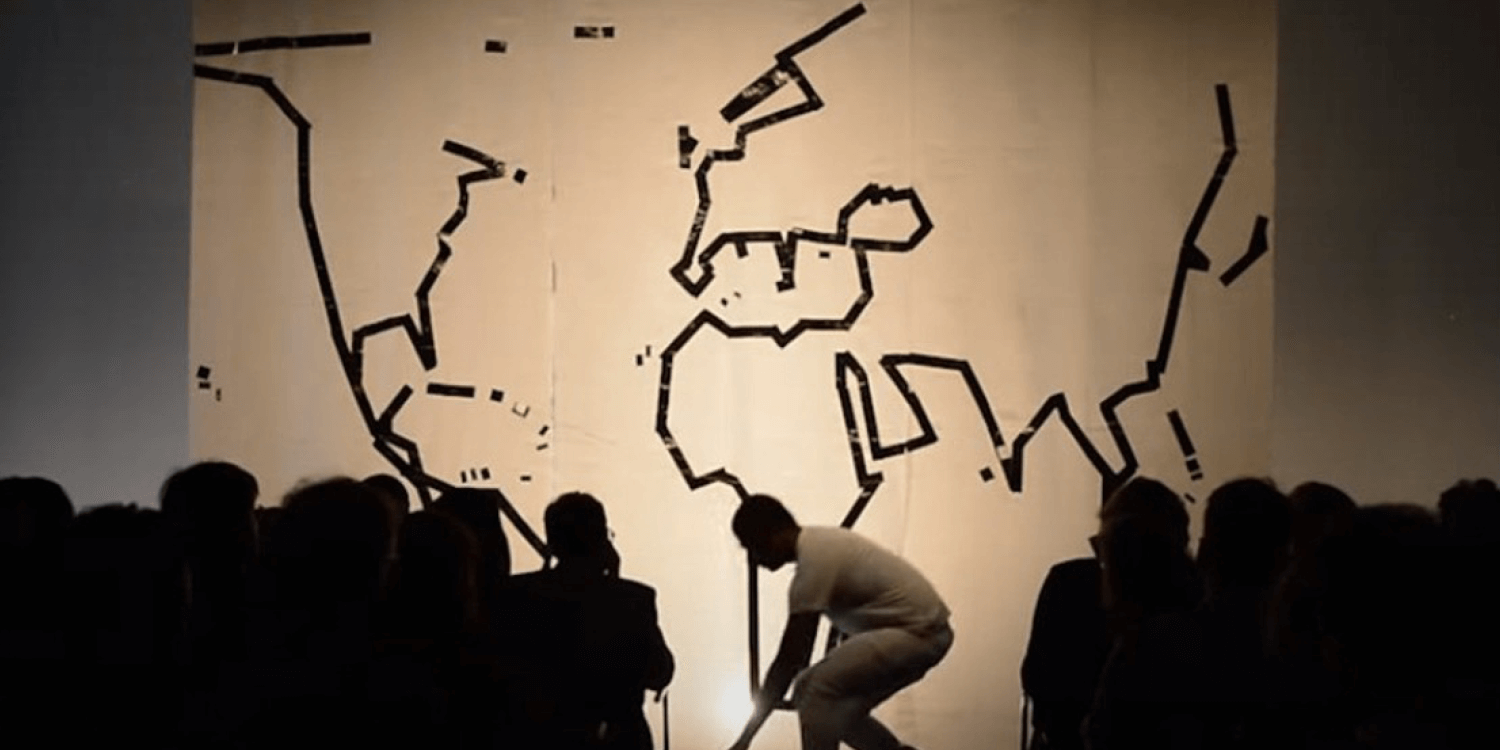 A Village Called Gario. Performance commissioned by Afrovibes Festival in 2013. Presented at Bebop Conference 2014 (Denmark), Transfigurations Conference at MACBA (Barcelona 2014), How Far How Near at Stedelijk Museum (Amsterdam) in 2014.
Can you give us an insight into how you hope to use the opportunity?
I plan to spend my time researching, meeting with makers and thinkers, and mapping the historical and contemporary conversations surrounding repatriation. I also look forward to visiting the G.A.S. Library and Picton Archive, connecting with organisations recommended by the team, and preparing a public talk that reflects on the complexities, responsibilities, and possibilities embedded in this work. More broadly, I’m here to learn—to listen, connect, and ground my research within Lagos’s rich cultural landscape.
RESIDENCY ARCHIVE
Event: Re:assemblages Symposium
Event Date: 4th - 5th November, 2025
The inaugural edition of the Re:assemblages Symposium, jointly presented by Guest Artists Space (G.A.S.) Foundation and Yinka Shonibare Foundation (Y.S.F.) within the framework of the second chapter of the Re:assemblages programme, took place from November 4th-5th, 2025. Framed by four conceptual currents, Ecotones, The Living Archives, Annotations, and The Short Century, the symposium explored transitional zones as sites of renewal, considered archives and libraries as future-shaping practices, attended to gaps and silences in the archive, and revisited Africa’s twentieth-century histories of independence and cultural production.
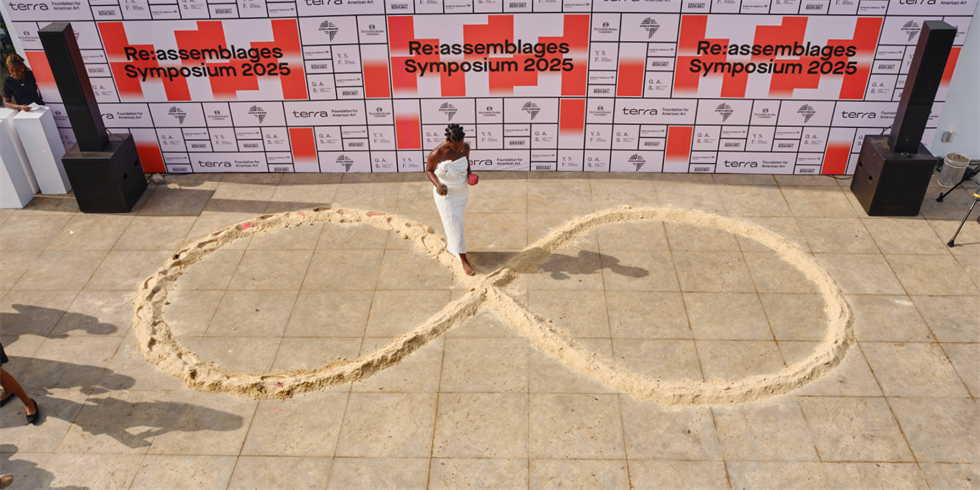 Re:assemblages Symposium Day One at Alliance Française de Lagos. 4th November, 2025.
About Quinsy Gario
Quinsy Gario is a performance poet and artist from Curaçao and St. Maarten interested in decolonial remembering and instituting otherwise. His work Zwarte Piet Is Racisme (2011–2012) ushered in the second anti-racism wave in the Netherlands. Through successive collaborative works in the Baltics from 2020 until 2024 he has contributed to conversations in the region on its role in the pan-European colonial project. He has an academic background in media studies, gender studies and postcolonial studies and is a graduate of the Master Artistic Research program at the Royal Academy of Art the Hague. He received the Royal Academy Master Thesis Prize 2017, the Black Excellence Award 2016, the Amsterdam Fringe Festival Silver Award 2015, the Dutch Caribbean Pearls Community Pearl Award 2014, the Kerwin Award 2014 and the Hollandse Nieuwe 12 Theater makers Prize 2011. From 2012 until 2018 he was a recurring participant of the Black Europe Body Politics conference series. In 2017 he received a Humanity in Action Detroit Fellowship and in 2017/2018 he was a BAK Fellow. Gario is a member of Family Connection which was co-founded by his mother Glenda Martinus. In 2021 the collective’s work was collected for the Dutch National Art Collection. He is currently a PhD candidate at the Vrije Universiteit Amsterdam researching Dutch Afro-Caribbean art, museum collections and refusal.
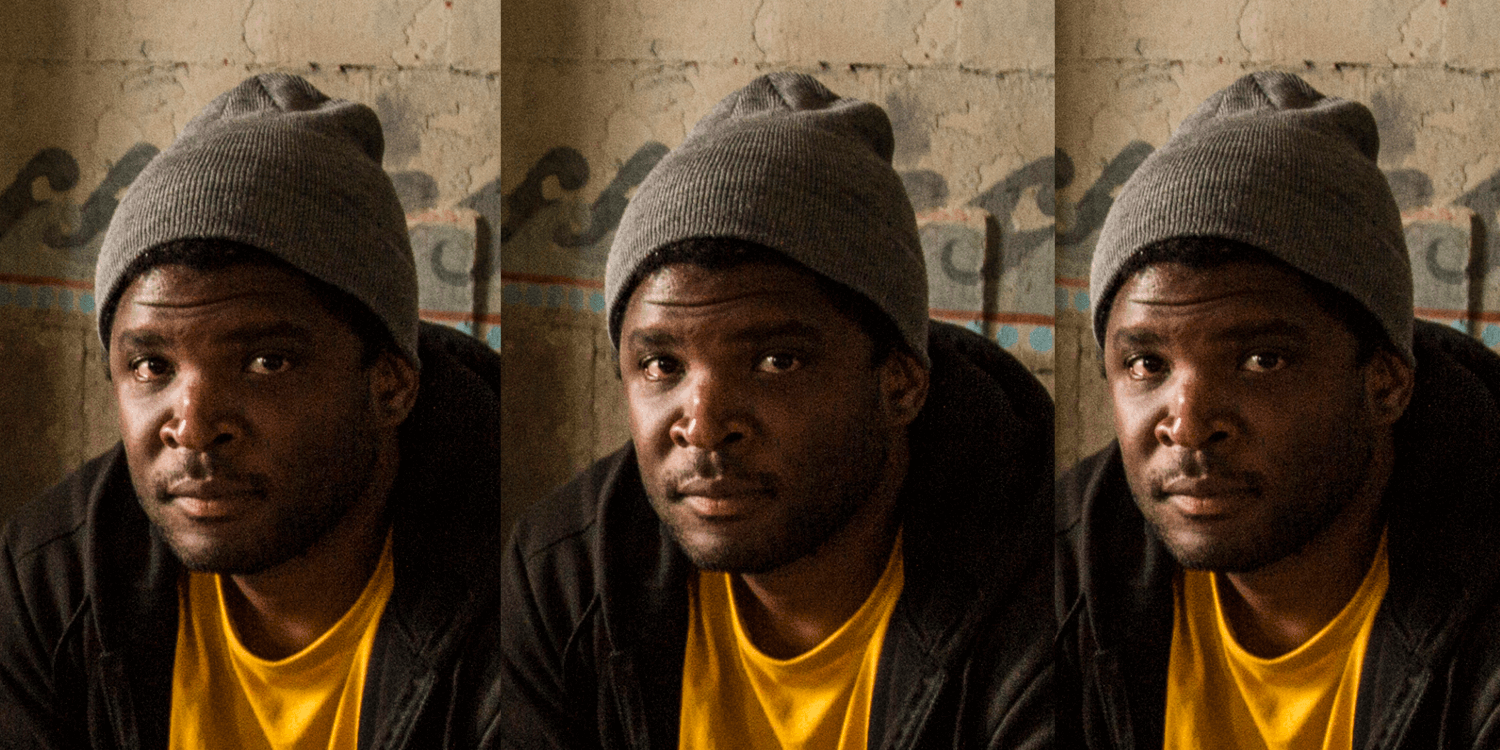 Photo of Quinsy Gario. Image courtesy of Annemarija Gulbe.
Quinsy's research residency was developed and organized in the context of a collaboration between Sustaining the Otherwise and G.A.S. Foundation. Sustaining the Otherwise is a collaborative research and artistic project about restitution, reparation and transformation, taking place in multiple locations over several years.