A Conversation with Ajoke Silva and Unveiling of Bisi Silva Commemorative Portrait, Led by Sasha Huber
Helsinki-based visual artist Sasha Huber, whose research-driven, multidisciplinary practice explores the politics of memory, care, and belonging in relation to colonial histories, concluded a four-week residency at G.A.S. Lagos in 2025. During her time at G.A.S., Sasha focused on developing a commemorative portrait of pioneering curator Bisi Silva, whom she first met in the early 2000s during a residency in Helsinki and remained in contact with until Silva’s passing. Central to this project was an intention to honour Bisi Silva’s influence on artistic and curatorial practice across the African continent. The portrait forms part of Saha’s ongoing The Firsts series, which comprises commemorative portraits paying homage to pioneering ancestral figures, with a particular focus on women from the African diaspora in Europe.
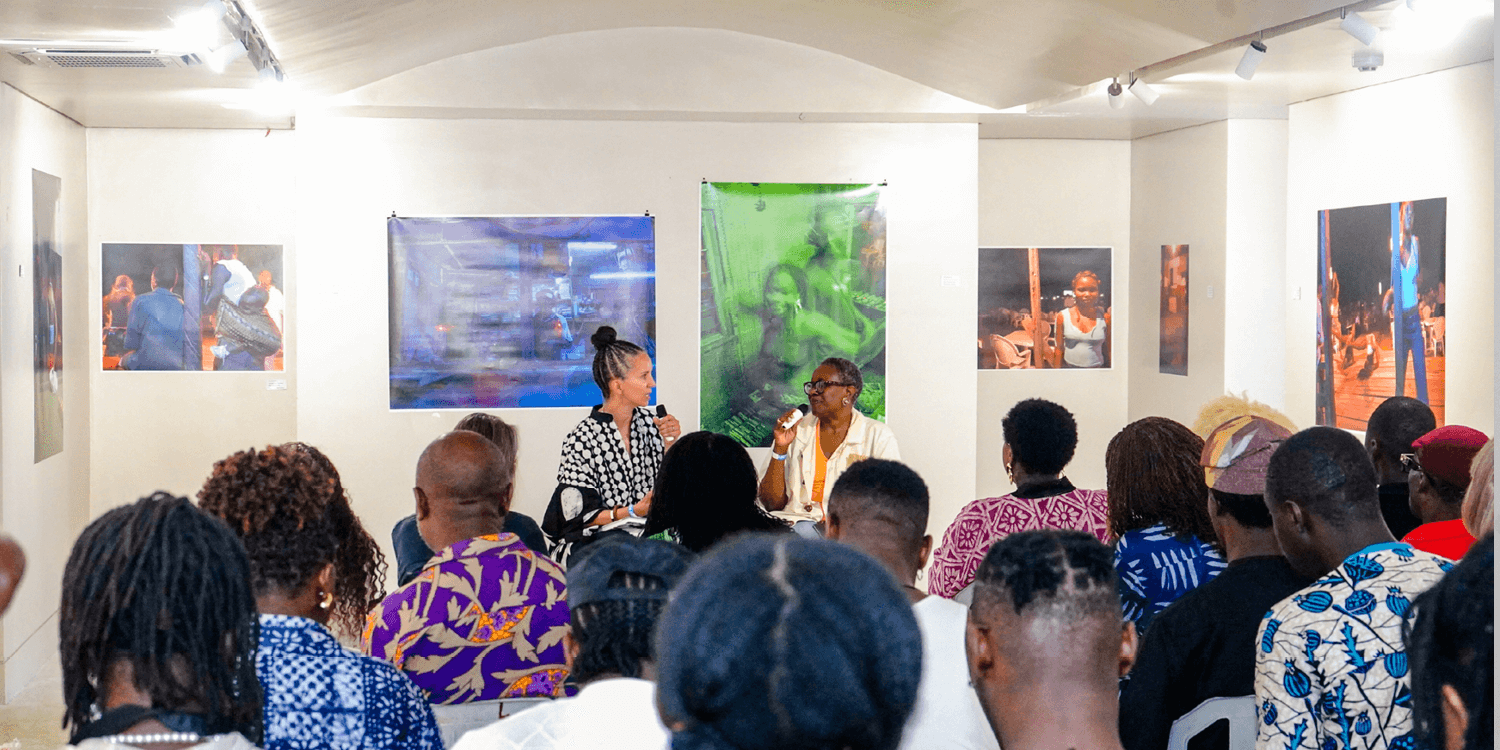 Sasha Huber in conversation with Ajoke Silvia on December 17th 2025. Image courtesy of CCA Lagos. Photographer: Bem Tilley-Gyado.
As her residency concluded, Sasha unveiled the portrait during the 18th anniversary of the Centre for Contemporary Art, Lagos (CCA Lagos), on December 17, 2025. Founded in 2007 by Bisi Silva, CCA Lagos was established as a platform for contemporary Nigerian visual arts and culture. Over time, it has grown into an institution that continues to shape artistic practice across the continent. The day featured a number of panel discussions and events. Sasha’s part of the evening began with an introduction by Ajoke Silva, Bisi Silva’s sister, who shared her connection to her sister, and introduced Sasha and her project. Sasha reflected on how she and Bisi met, the ideas they exchanged, and the inspiration behind her book You Name It, which brings together her artistic practice and activism. She also spoke about the importance of sharing Bisi Silva’s legacy through projects such as The Firsts.
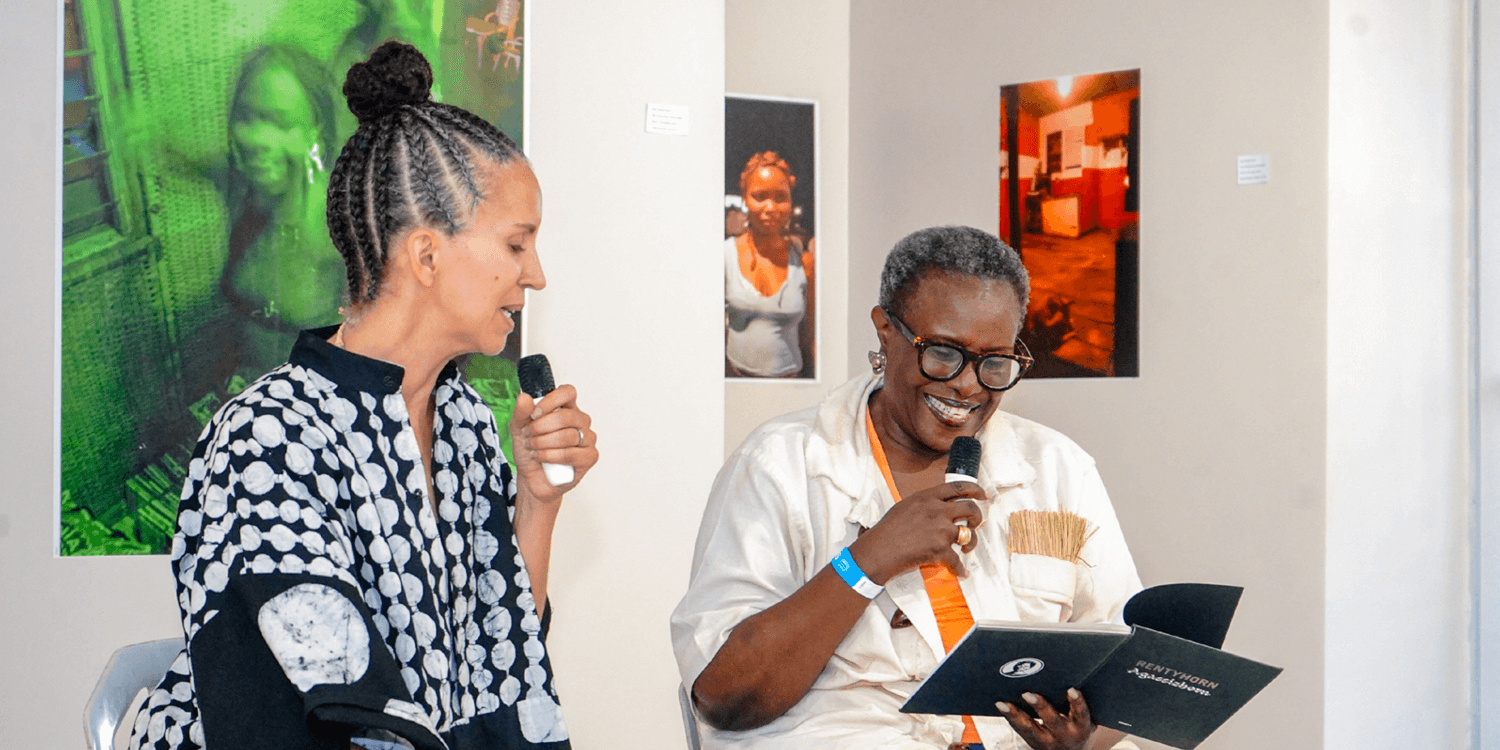 Sasha Huber in conversation with Ajoke Silvia on December 17th 2025. Image courtesy of CCA Lagos. Photographer: Bem Tilley-Gyado.
The evening concluded with the unveiling of the portrait, created using staple pins on wood, a material approach central to Sasha’s practice. By working with a staple gun, a tool often associated with force and violence, Sasha reclaims the gesture to suggest repair, symbolically stitching together wounds and challenging contested narratives. During the unveiling, she offered insight into her process and the conceptual layers of the work.
The portrait was later gifted to CCA Lagos as a permanent gesture of remembrance.
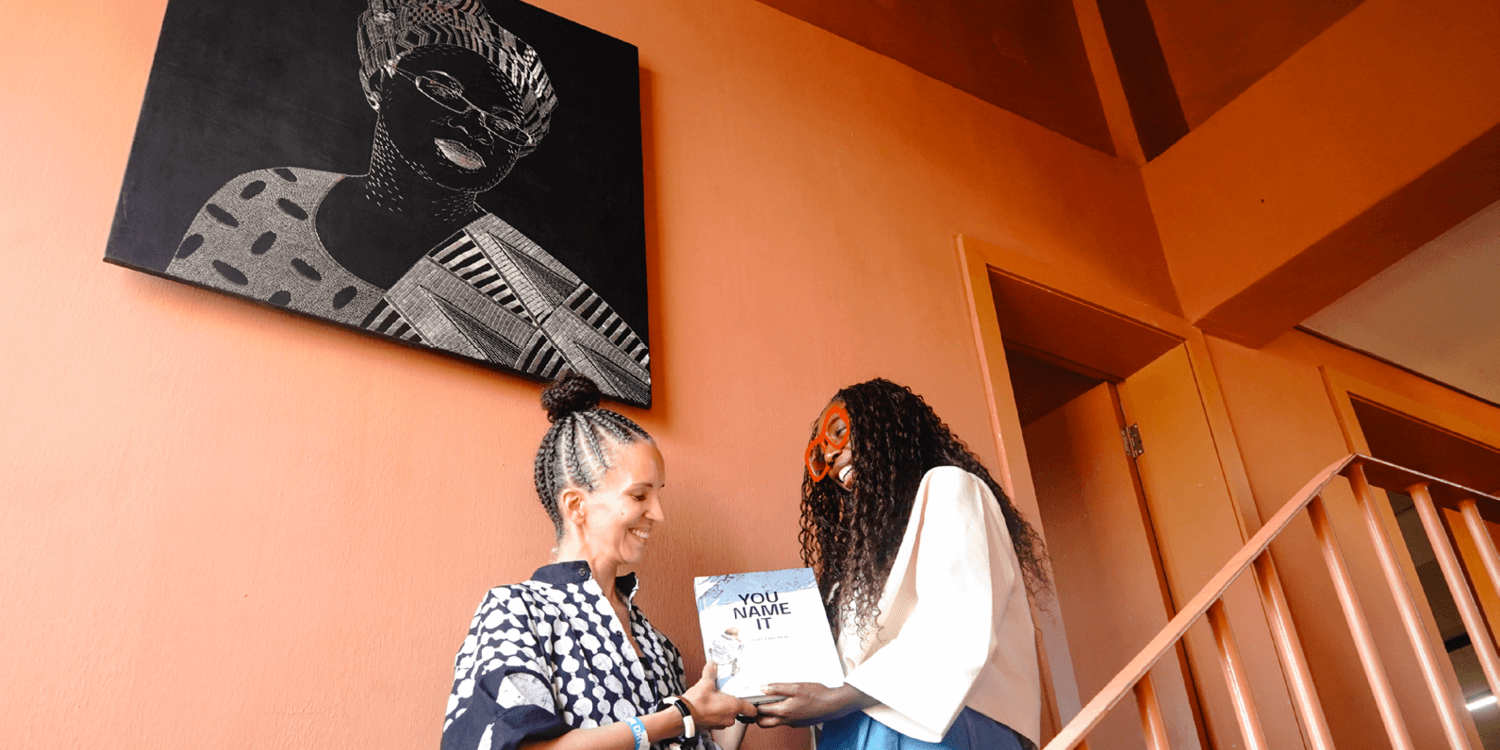 Sasha Huber with Oyindamola Fakeye, director of CCA Lagos in front of Bisi Silvia portrait on December 17th 2025. Image courtesy of CCA Lagos. Photographer: Bem Tilley-Gyado.
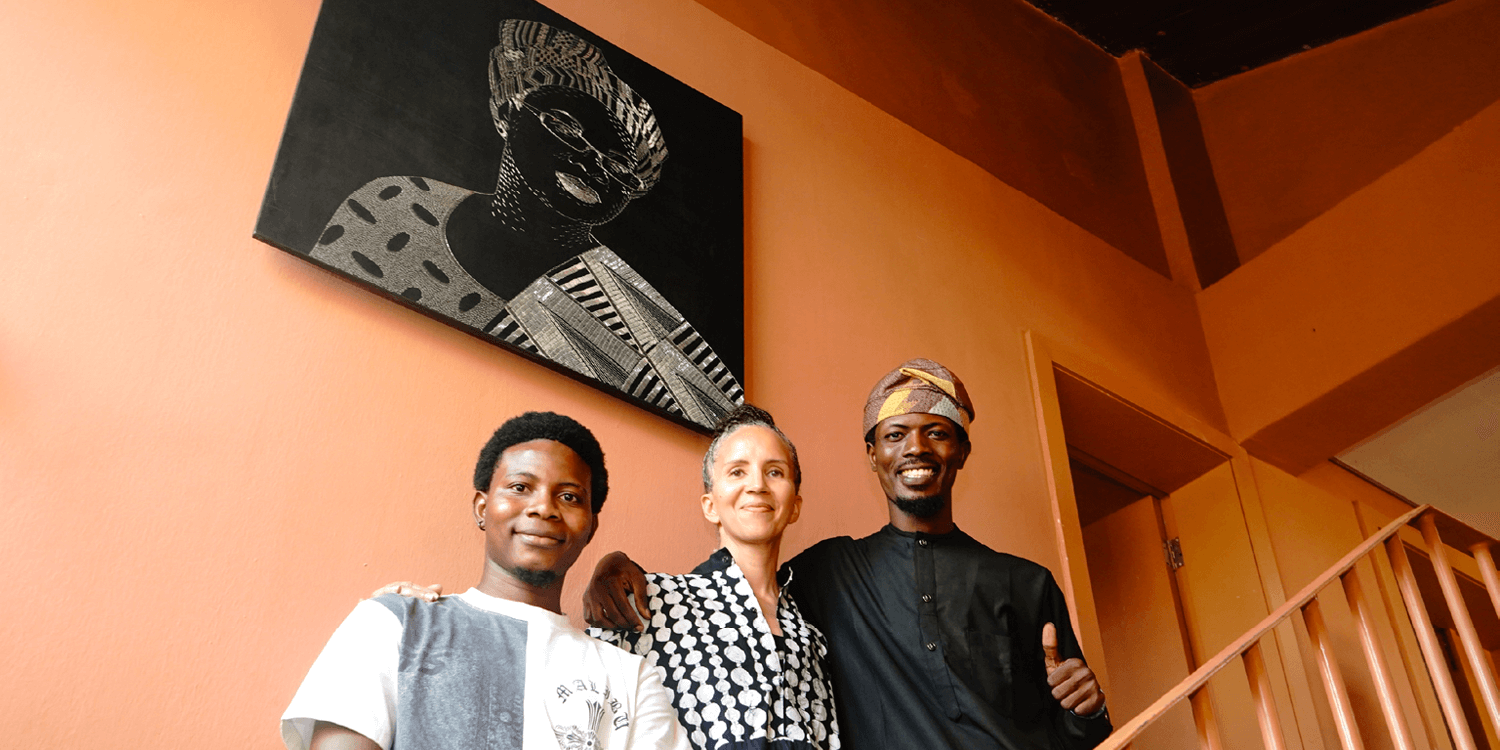 Sasha Huber with guests in front of Bisi Silvia portrait on December 17th 2025. Image courtesy of CCA Lagos. Photographer: Bem Tilley-Gyado.
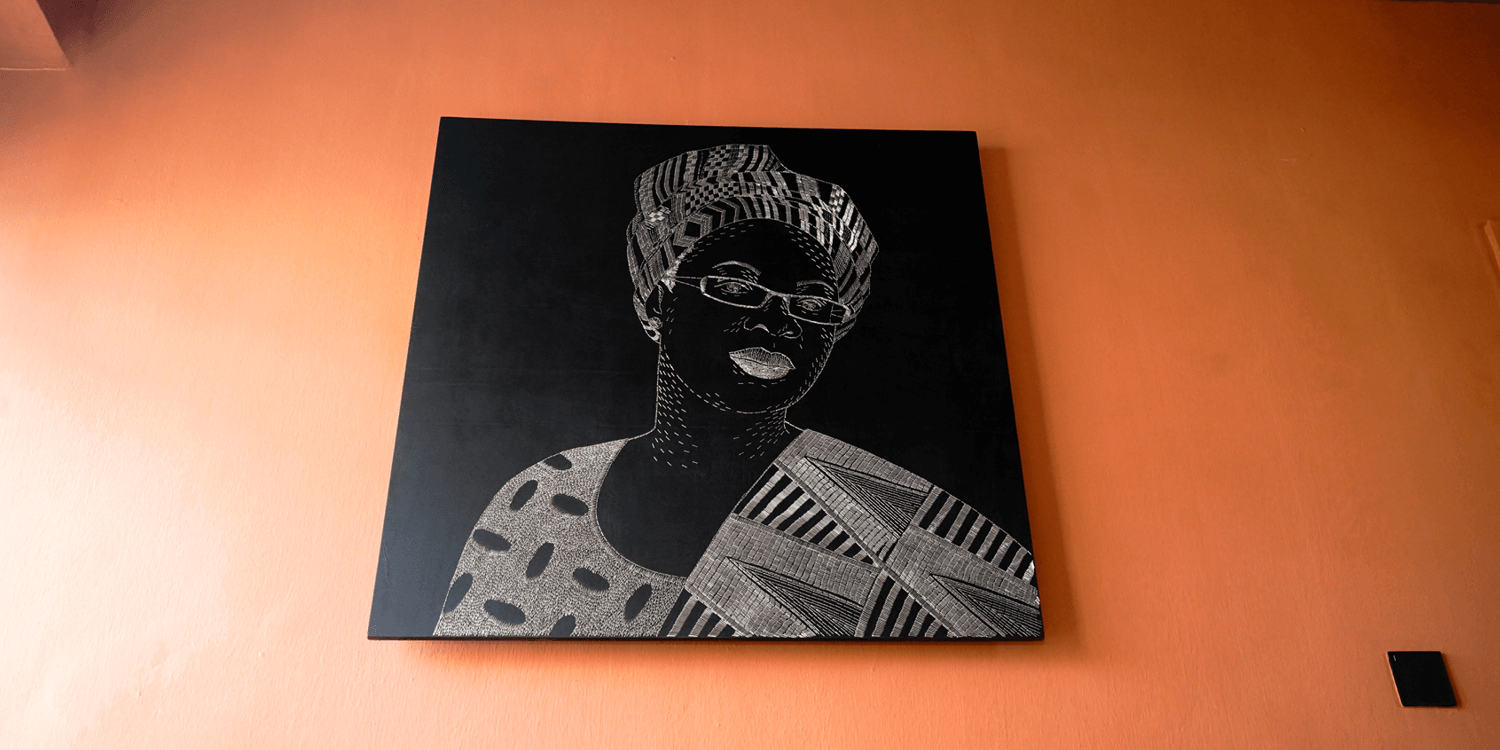 Bisi Silvia's portrait presented on December 17th 2025. Image courtesy of CCA Lagos. Photographer: Bem Tilley-Gyado.
About Sasha Huber
Sasha Huber is a Helsinki-based visual artist of Swiss-Haitian heritage whose work explores the politics of memory, belonging, and care in relation to colonial legacies. Bridging history and the present, she engages with archival material through a layered practice spanning reparative interventions, film, photography, and collaboration. Known for using a staple gun—a tool symbolically resonant as both weapon and means of repair—it becomes a method of stitching together colonial wounds. Huber holds an MA in visual culture from Aalto University in Helsinki and is currently pursuing a practice-based PhD in artistic research at Zurich University of the Arts. From 2021 to 2024, her touring exhibition You Name It, organized by The Power Plant Contemporary Art Gallery in Toronto in collaboration with Autograph in London, marked a significant chapter in her ongoing international practice and was accompanied by a monograph of the same title, published by Mousse Publishing.
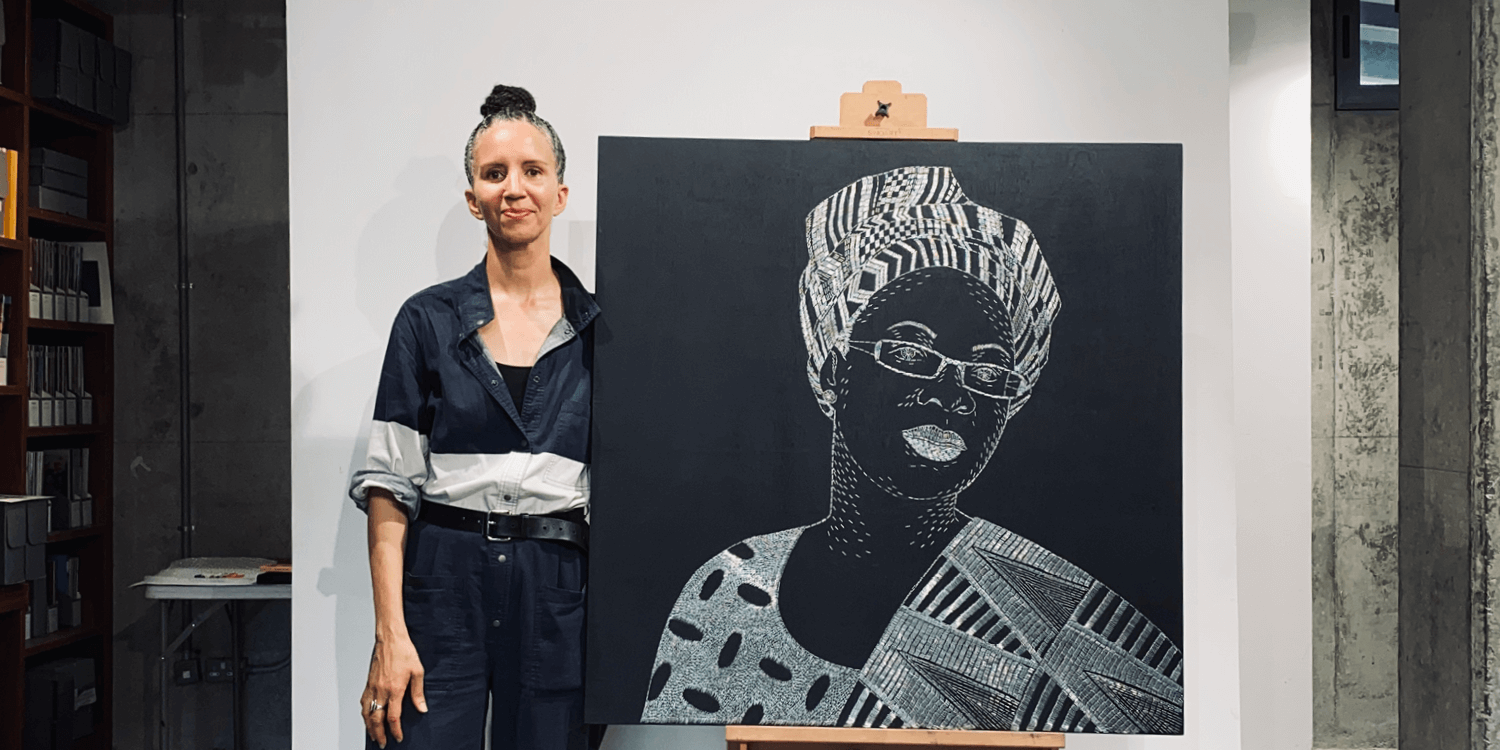 Portrait of Sasha Huber. Image courtesy of the artist.
Sasha's research residency is developed and organized in the context of a collaboration between Sustaining the Otherwise and G.A.S. Foundation. Sustaining the Otherwise is a collaborative research and artistic project about restitution, reparation and transformation, taking place in multiple locations over several years.
Sasha's research trip is also supported by Pro Helvetia Johannesburg and Frame Contemporary Art, Finland, while her artistic work is supported by the Arts Promotion Centre, Finland.
